
How Tailoring Shops in Saudi Arabia Are Modernizing: Measurements, POS & ZATCA Phase 2 E-Invoicing
Traditional tailoring in Saudi Arabia is going digital. Learn how modern ateliers manage customer measurements, track fabric rolls, eliminate order errors, and comply with ZATCA Phase 2 e-invoicing using IbraTech ERP.
Tailoring businesses work with garments as varied as men's thobes, abayas, and evening dresses. Each order can involve a different measurement record, material, fitting appointment, and collection date. When these details live in separate notebooks or messages, staff may struggle to see which version is current. Digital records can help connect the information, provided the workflow reflects how the shop actually operates.
The most common pain point for tailoring businesses is lost or misinterpreted body measurements. When a tailor writes down neck, chest, shoulder, or sleeve dimensions on a paper slip, notes can get misplaced or smudged. By digitizing measurement cards with dedicated profiles for each customer, a modern ERP system ensures that any branch or master cutter accesses the exact millimeter specifications instantly, along with personal fitting preferences.
Fabric roll management is another area where profits are quietly lost. Calculating exact yardage or meters consumed per garment prevents tailors from over-cutting or under-delivering. A specialized system tracks raw fabric batches, buttons, zippers, linings, and threads in real time, automatically reducing inventory as work orders move through cutting, stitching, and finishing.
ZATCA's Phase 2 e-invoicing requirements apply through notified taxpayer waves, not simply because a business is a tailoring shop. Check the shop's applicable wave and integration date against ZATCA's official guidance and notification. For businesses entering Phase 2, evaluate the required invoice formats, security fields, integration, and reporting or clearance workflows with your accountant and software provider. A printed QR code alone is not a demonstration that the entire workflow meets the applicable requirements.
Customer communication is what truly elevates modern ateliers above competitors. When a client drops off expensive fabric for custom stitching, automated WhatsApp notifications sent when the order enters cutting, when the fitting stage is ready, and when the final garment is pressed and ready for collection build immense trust and dramatically reduce phone call interruptions.
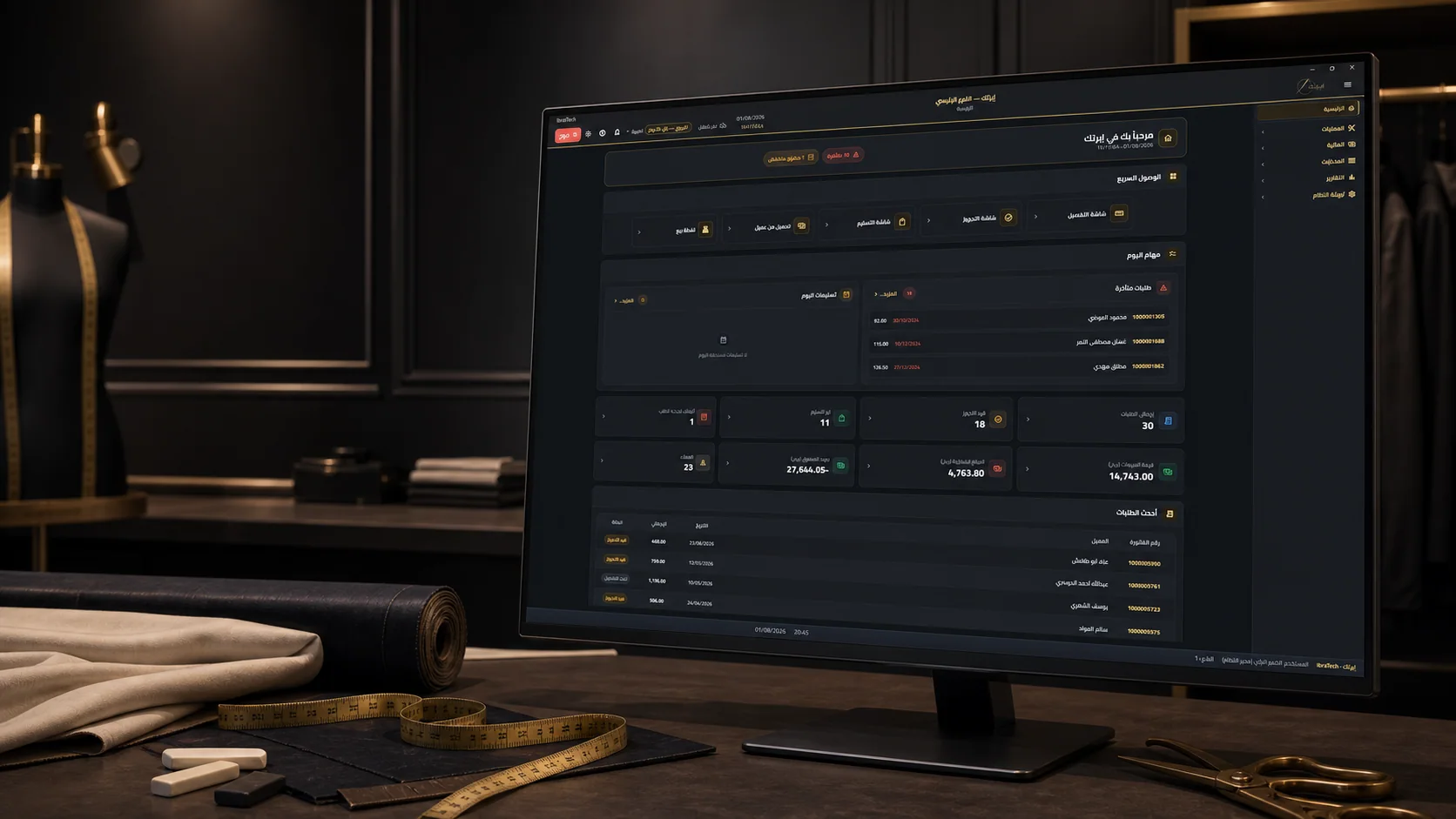
PCC Group developed IbraTech (إبرتك) for tailoring shops, with customer measurements, inventory, production tracking, and invoicing in an Arabic interface. Its product scope includes ZATCA Phase 1 and Phase 2 invoicing architecture and WhatsApp integration. During a demonstration, confirm the configuration, enabled integrations, onboarding responsibilities, and support arrangements for your own shop. A practical acceptance test with representative transactions is more useful than a general promise that every business requirement is already covered.
Sources
Related services
Stay Updated
Subscribe to our newsletter for the latest insights and company news.